- Your cart is empty
- Continue Shopping

Product
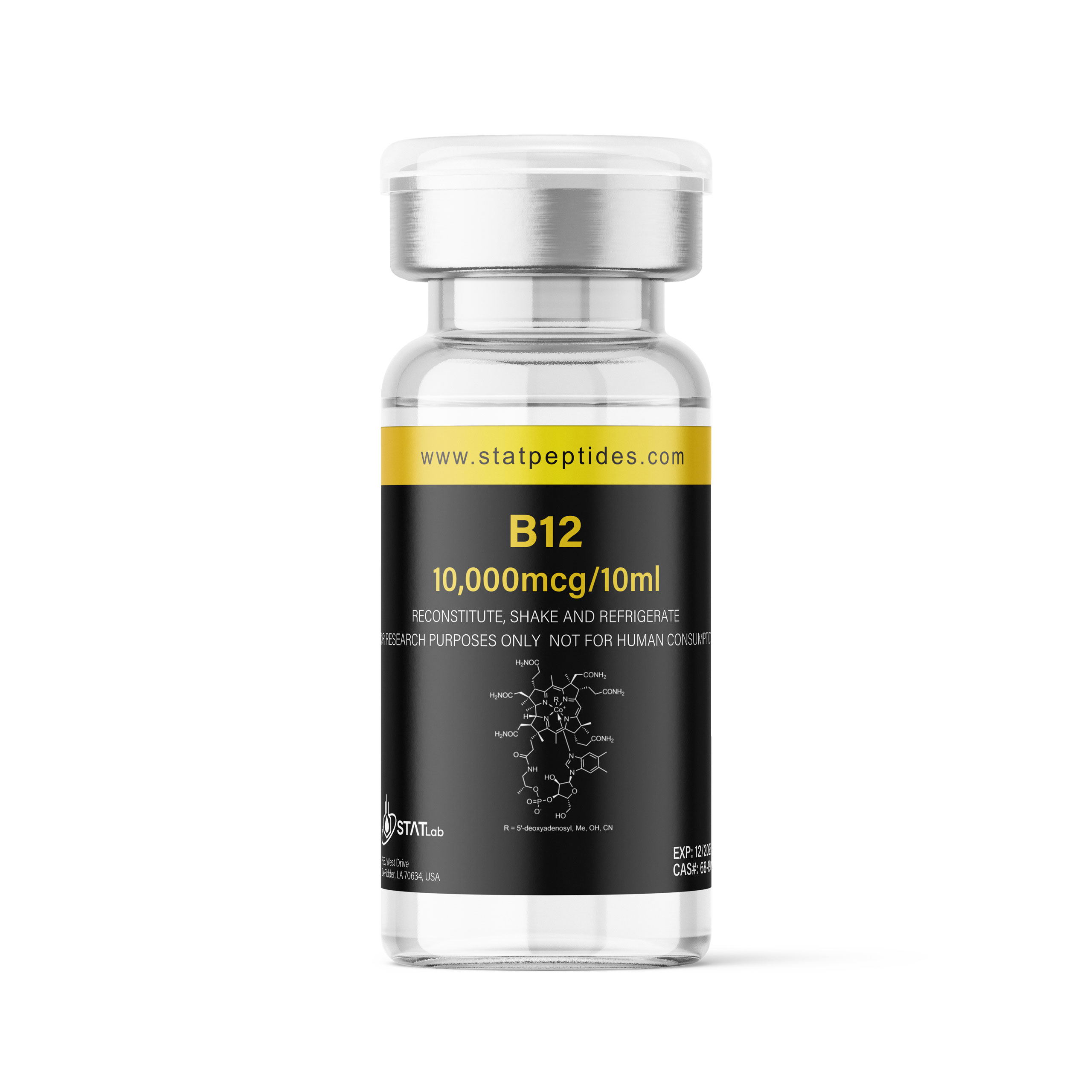
B12 10,000mcg/10ml CAS 68-19-9
$39.99
67 in stock


Introduction
Research shows that cobalamin (vitamin B12) was first investigated in 1920 during research on fatal conditions known as pernicious anemia, when scientists noticed that consuming large amounts of raw liver helped patients to recover. In 1948 researchers successfully isolated and purified vitamin B12 as red crystalline material from liver extracts, and its molecular structure particularly in common supplement form cyanocobalamin-was later determined using Xray crystallography. Chemical vitamin B12 is largest and most structurally complex of all known vitamins. What makes it distinct is presence of single cobalt (Co) atoms at its core, embedded within a ring-shaped structure called corrin ring (Brown,2021). B12 exists in several forms including methyl cobalamin and adenosyl cobalamin, which ae biologically active forms in human body. Its characteristics are deep red color comes from cobalt metal at center of its structure.
It is scientifically proven that Vitamin B12 plays several essential roles in keeping the body healthy. It helps in the production of red blood cells, which carry oxygen throughout the body, and it also supports the nervous system, allowing our nerves to function properly [Mathews, 2023]. One of the important things B12 does is help control a substance in the blood called homocysteine. In its methyl cobalamin form, B12 helps convert homocysteine into methionine, which the body then uses to make SAM (S-adenosylmethionine)—a compound needed for many processes, including mood regulation and cell repair [Selhub, 2020]. Another form of B12, called adenosyl cobalamin, helps the body break down certain fats and proteins to produce energy. In this process, it converts methyl malonyl CoA into succinyl CoA, which then enters the citric acid cycle, a key pathway for energy production in cells [Fedosov, 2022]. B12 also works together with folate (vitamin B9) to keep cells healthy by helping regenerate an active form of folate called THF (tetrahydrofolate) through a reaction known as methionine synthase [Scott, 2016].
New research shows that B12 may also help bacteria to survive and adapt to tough conditions, especially when facing antibiotics. Some harmful bacteria use B12 to change their metabolism and become stronger against drugs. In some cases, B12 can even control how bacteria express their harmful traits through a process called quorum sensing [Vibrio, 2024]. By changing how bacteria use energy, B12 can affect how well they compete and survive in tough conditions [Seth, 2022].
Research shows that B12 also has a big role in controlling our genes and how they work. It helps in making SAM, which is the body’s main tool for adding methyl groups to DNA and proteins. This process, called methylation, helps to turn genes on or off without changing the actual DNA code [Choi, 2019]. If someone doesn’t have enough B12, their body may not make enough SAM, which can lead to problems in genes regulation. These changes are linked to diseases like cancer and brain disorders. B12 also helps keep our DNA safe and supports the body’s ability to fix damaged DNA. So, having enough B12 is very important for keeping our cells healthy and stable [Finkelstein, 2015].
Another interesting investigation shows the interaction of B12 with the bacteria in our guts. Humans can’t make B12 on their own, so we need to get it from food, mostly from animal sources. But many bacteria and tiny organisms in our guts can make B12 themselves [Fang, 2017]. Most of this happens in the large intestine, but our body absorbs B12 in the small intestine, so we can’t use the B12 made by gut bacteria [Gruber, 2020]. This creates a competition among bacteria—some make B12 (like Eubacterium), while others need to consume it (like Bacteroides). The available amount of B12 affects bacterial growth and their behavior. [Seth, 2022].
Vitamin B12 is a powerful and complex nutrient with a long history and many roles in the body. Its special cobalt-based structure helps it work as a cofactor in two key enzyme reactions. These reactions are important for making blood and keeping the brain healthy [Marsh, 2015]. B12 also helps control gene activity through methylation, making it important for epigenetics and DNA regulation [Quinlivan, 2024]. In the gut, B12 affects which bacteria thrive and how strong they become, even influencing how dangerous some bacteria can be [Zhang, 2019]. Learning more about how B12 works in the body and with microbes can help us discover new ways to improve health and fight disease [Vibrio, 2024].
What is Vitamin B12
Vitamin B12, chemically known as cobalamin, is an incredibly important, water-based vitamin that the human body needs to survive. It is distinct among all vitamins because it possesses the largest and most complex chemical structure. This nutrient is essential for maintaining health across several critical physiological systems. One of most well-known functions is its role in the proper production of red blood cells. It is also critically required for keeping our nerves healthy and functioning [Mathews, 2023]. It acts as an indispensable cofactor, supporting two key enzyme reactions vital for making blood and maintaining a healthy nervous system. Its importance extends to the genetic level, as it is crucial for controlling gene activity through the process of methylation. Ultimately, a severe lack of this nutrient can lead to major disruptions in metabolic function, confirming its essential role in human life [Fedosov, 2022].
Historical Usage and Extraction
The scientific study of vitamin B12 has roots dating back to the 1920s. At this time, researchers were heavily focused on understanding and treating a once-fatal disease called pernicious anemia. This condition was lethal, prompting an urgent search for a remedy. An early, groundbreaking, yet unusual discovery showed that consuming large amounts of raw liver could effectively help to cure this illness. This historical usage indicated that a powerful, life-saving substance was hidden within the liver tissue. The use of liver persisted until the active component could be successfully isolated and purified. Finally, in 1948, researchers achieved a breakthrough by managing to extract and purify from liver. The isolated substance was yielded as distinct, red-colored crystals known as vitamin B12 [Mathews, 2023].
Chemical Structure and Properties
Research shows that complexity of Vitamin B12, or cobalamin, distinguishes it as the largest and most complex vitamin molecule. The chemical core of the molecule is defined by the presence of a single cobalt atom. This cobalt atom is situated precisely at the center of a large, flat, ring-shaped system known as the corrin ring. The corrin ring structure is chemically related to the porphyrin ring found in heme but differs in that it has one less carbon-to-carbon bridge between the four nitrogen atoms [Marsh, 2015]. Cobalt metal gives deep red color to purify vitamin B12. It is readily classified as a water-soluble compound, which influences its absorption and limited storage capacity within the body. Vitamins exist in several chemical forms, including the two versions that are biologically active in the body: methyl cobalamin and adenosyl cobalamin. The structure of the most common, stable form used in supplements, cyanocobalamin, was definitively determined using the scientific method of X-ray crystallography [Watkins, 2012].
- Synonym/Common Name: The compound is widely known as Vitamin B12
- Empirical/Molecular Formula: C63H88CoN14O14 P. This formula reflects its extreme complexity and large number of atoms [PubChem, 2024].
- Central Atom: Contains a single atom of the metal Cobalt (Co) at its core.
- Core Structure: The Cobalt atom is held within a corrin ring, a chemically distinctive structure.
- Molecular Weight: Approximately 1355.37 grams per mole (g/mol).
- CAS Number: 68−19−9.
- Appearance: Typically found as a dark red crystalline powder or dark red crystals.
- Solubility: It is a water-soluble vitamin. Its measured solubility in water is about 12 grams per liter (12 g/L) [Merck Millipore, 2024].
In laboratory practice, cyanocobalamin is supplied as a high-purity, research-grade reagent. Suppliers provide a Certificate of Analysis (CoA) confirming compound identity, assay, impurity profile, and storage stability. Proper labeling with “For Research Use Only (RUO)” and availability of a Safety Data Sheet (SDS) are mandatory to ensure compliance with regulatory and institutional safety requirements (Sigma-Aldrich, 2023).
Importance of vitamin B12 in research
1.Role in metabolic pathways
- One-Carbon Metabolism Cycle
It is scientifically proven that one-carbon metabolism cycle is a key process in our cells that helps move single carbon units around. These carbon units are needed to make DNA and to control how genes are turned on or off through a process called methylation. [Choi, 2019]. Vitamin B12 plays an important role here, especially in its active form called methyl cobalamin. This form of B12 helps an enzyme called methionine synthase do its job—turning an amino acid called homocysteine into another one called methionine. Methionine is then used to make S-adenosylmethionine (SAM), which is the body’s main tool for adding methyl groups to different molecules. [Selhub, 2020]. So, in short, B12 helps to start a chain reaction that’s essential for healthy DNA and gene activity.
- The Methylation Cycle
Research shows that methylation cycle is a nonstop process in our cells that depends on Vitamin B12 to make a special molecule called SAM (S-adenosylmethionine). SAM is known as the cell’s “universal methyl donor” because it helps with many important tasks in the body [Selhub, 2020]. Once SAM is made from methionine, it’s ready to pass a small chemical tag—called a methyl group—to other molecules like DNA or proteins. This tagging process is called methylation, and it helps control which genes are turned “on” or “off.” If your body doesn’t have enough B12, it can’t make enough SAM, and the whole cycle slows down. When methylation doesn’t work properly, it can lead to serious health problems like brain disorders and even cancer [Choi, 2019].
- Fatty Acid and Amino Acid Catabolism
Research shows that Vitamin B12 helps in breakdown of certain fats and proteins so they can be used for energy. This job is done by a special form of B12 called adenosyl cobalamin. It works with an enzyme to turn a substance called methyl malonyl CoA into succinyl CoA. Methyl malonyl CoA is made when your body breaks down odd-chain fatty acids and some amino acids. Once it’s converted, succinyl CoA enters the cell’s energy-making system called the citric acid cycle. If your body doesn’t have enough adenosyl cobalamin, methyl malonyl CoA builds up—and that buildup is a key sign of B12 deficiency. [Fedosov, 2022].
- Folate Metabolism (Symbiotic Relationship)
Research shows that Vitamin B12 and folate (also called Vitamin B9) work as a team in your body’s metabolism. Folate often gets stuck in an inactive form called methyl tetrahydrofolate—and it can’t do its job until B12 shows up. That’s where B12 helps during a reaction called methionine synthase, B12 takes the methyl group from inactive folate and passes it along. This unlocks folate and turns it into its active form, tetrahydrofolate (THF). THF is super important because it helps make DNA. So, if your body doesn’t have enough B12, folate stays trapped and DNA production slows down. That’s why both B12 and Folate are needed to make healthy red blood cells [Scott, 2016]
2. Role in antibiotic resistance
Recent research has found that Vitamin B12 doesn’t just help humans—it also plays a surprising role in helping bacteria survive. Some harmful bacteria use B12 to change how they make and use energy, especially when they’re under attack by antibiotics. This change makes them tougher and better able to resist drugs [Seth, 2022]. In some instances, the vitamin is even capable of controlling how bacteria express their harmful or pathogenic traits through a cell-to-cell communication system called quorum sensing. These discoveries show that B12 isn’t just a nutrient, it’s also an environmental signal that can affect how well antibiotics work. [Quinlivan, 2024].
3.Vitamin B12 in Genetics and Epigenetics
It is scientifically proven that Vitamin B12 plays a significant and profound role in controlling our genes and how they are regulated. This influence stems from its direct involvement in the synthesis of a critical molecule within the one-carbon metabolism cycle [Selhub, 2020].
- Epigenetic Regulation via Methylation
The key link between B12 and epigenetics is the molecule S-adenosylmethionine (SAM). B12 is required for the metabolic step that produces methionine, which is then used to synthesize SAM [Selhub, 2020]. SAM acts as the body’s primary tool for adding methyl groups to both DNA and proteins. This process is known as methylation, and it represents a key mechanism in epigenetics. Methylation effectively helps to turn genes “on” or “off” without altering the sequence of the underlying DNA. Therefore, B12is indirectly crucial for controlling gene activity through this essential methylation process [Choi, 2019].
- Consequences for DNA Stability and Disease
If an individual has an insufficient amount of B12, their body may fail to generate enough SAM. This deficiency results in disrupted methylation patterns and problems with gene regulation. These resulting epigenetic changes have been scientifically linked to the development of serious illnesses, including cancer and brain disorders [Choi, 2019]. Furthermore, adequate B12 is important for maintaining the overall stability and health of our cells. It helps keep our DNA safe and supports the body’s natural mechanisms for repairing damaged DNA [Zhang, 2019]
4.Vitamin B12 in the Microbiota of the Gut
Research shows that the relationship between Vitamin B12and the bacteria residing in our intestines is defined by a paradox concerning synthesis and absorption.
- Source, Synthesis, and Absorption
Humans are metabolically unique in that they cannot synthesize B12on their own. We must obtain this essential nutrient entirely from our diet, primarily through consuming animal products [Mathews, 2023]. Conversely, a vast number of bacteria and tiny organisms within the human gut are fully capable of producing B12 themselves. However, a spatial disconnect prevents humans from benefiting from most of this microbial B12 production. Most of the bacterial synthesis of the vitamin occurs in the large intestine. Crucially, the human body’s main site for absorbing B12 into the bloodstream is located far upstream in the small intestine. Because of this anatomical separation, the B12 that our own gut bacteria produce is generally not available for human use [Fang, 2017].
- Dietary / Supplemental B12 and Microbial Balance
Recent studies show that taking high amounts of Vitamin B12—especially in the form called cyanocobalamin—can change the makeup of gut bacteria. In one experiment with mice, extra B12 shifted their gut microbes and made them more vulnerable to a harmful bacteria called Citrobacter rodentium. This suggests that too much B12 might disturb the natural balance of microbes in the gut, making it easier for infections to take hold (Forgie et al., 2024).
- Microbial Competition and Ecosystem Influence
This situation creates a dynamic struggle for resources, which is a major factor influencing the composition of the microbial community. The gut contains distinct groups of bacteria: some are B12 producers, such as Eubacterium, and others are B12 consumers, such as Bacteroides, who require the vitamin to survive. The concentration of B12 available in the local environment is a key factor that determines which bacterial species will be able to thrive and how they behave. By affecting the growth and competitive strength of these different populations, B12 profoundly impacts the overall composition and ecological balance of the entire gut ecosystem [Seth, 2022].
Conclusion:
In conclusion Vitamin B12, also known as cobalamin, began with a major scientific breakthrough in 1948 when two research teams—Folkers at Merck and Smith at Glaxo—successfully isolated the bright red compound from liver extracts, offering a cure for the deadly disease pernicious anemia. Later, Dorothy Hodgkin mapped its complex structure using X-ray techniques, deepening our understanding of how it works in the body. Over time, the focus of research shifted from simply treating deficiency to making Vitamin B12 more affordable and accessible through large-scale microbial fermentation, which proved far more efficient than chemical synthesis (Ahn et al., 2022). Today, scientists are exploring its potential to treat nerve-related conditions like multiple sclerosis and Parkinson’s, using advanced delivery systems such as nanoparticles to improve absorption. From its challenging discovery to its role in cutting-edge fields like genetic engineering and nanotechnology, Vitamin B12 remains a vital and evolving topic in both medicine and nutrition (Zou et al., 2022).
Research shows that Vitamin B12 (also called cobalamin) plays a powerful role in the body—it acts like a master switch that helps control key processes such as DNA creation and brain function by supporting the folate and adenosylmethionine cycles. But its importance goes even further. Research shows that B12 closely interacts with the gut microbiota, where both the vitamin and the bacteria influence each other in a two-way relationship that affects how much B12 is available and how the body uses it (Zou et al., 2022). Scientists have also discovered that B12’s special structure can be used to sneak antibiotics into harmful bacteria, offering a new way to fight antimicrobial resistance (AMR) (Hogle et al., 2021). On top of that, our genes and epigenetics play a big role in how we absorb and process B12, which can impact on our overall health and risk of disease through changes like gene methylation. Looking ahead, the most promising research will use these insights to create personalized treatments—like smarter B12-based therapies, engineered gut bacteria that produce more B12, and new ways to tackle drug-resistant infections using B12 pathways. This makes Vitamin B12 not just a vital nutrient, but a key player in the future of medicine. (Zou et al., 2022).
One of the biggest challenges in Vitamin B12 research is that our bodies don’t absorb it easily. It relies on a special protein called intrinsic factor to be taken in properly, and even then, measuring the active form of B12 in the blood can be quite tricky. (Paul & Brady, 2017). To solve these problems, scientists are turning to powerful new tools. For example, genetic microbiology is being used to create improved versions of B12 and to reprogram gut bacteria so they can produce forms of the vitamin that are easier for the body to absorb. (Ahn et al., 2022). At the same time, Artificial Intelligence (AI) is helping researchers analyze huge amounts of data, including a person’s unique genetic profile—to figure out exactly how much B12 someone needs. This allows for the creation of personalized supplements that work better for everyone. Together, these innovations are paving the way for smarter, more effective B12 treatments that could benefit everyone. (Zou et al., 2022).
Laboratory Applications and Best Practices
In laboratory research, vitamin B12 is utilized in:
– Enzymology – studying methylation and mutase pathways, Cell culture supplementation maintaining methylation cycles in vitro, Microbiome research – exploring microbial competition, resilience, and ecology, Metabolic labeling – tracing one-carbon cycles (Sigma-Aldrich, 2023).
Best practices include:
– Always source research-grade cyanocobalamin with verified CoA.
– Prepare stock solutions under sterile, light-protected conditions to prevent degradation.
– Store between 2–8 °C for long-term stability.
– Clearly label with “For Research Use Only” and ensure SDS availability.
– Monitor microbial communities with sequencing or culture assays when varying B12 concentrations(NCBI, 2023).
Why Choose Stat Peptide Vitamin B12?
Stat Peptide provides premium research-grade cyanocobalamin, manufactured and tested under stringent laboratory standards. Key advantages include:
- High Purity & Verified Quality: Each batch undergoes HPLC and MS analytical verification, sterility testing, and endotoxin quantification.
- Detailed Certification: Accompanied by a Certificate of Analysis (CoA) confirming assay values, impurity profile, and storage recommendations.
- Research-Grade Assurance: Supplied exclusively with “For Research Use Only” labeling to ensure laboratory compliance.
- Optimized Packaging & Storage: Provided at 10,000 mcg / 10 mL with stability ensured under 2–8 °C storage conditions.
- Trusted by Researchers: Backed by consistent quality and transparent documentation, making Stat Peptide a reliable partner for advanced biochemical and microbiome research.
By choosing Stat Peptide, laboratories benefit from consistency, reproducibility, and reliability, ensuring that experimental outcomes are supported by verified and stable reagents.
References
- Brown, S. L. (2021). Cobalt: An Essential Element in Cobalamin. Journal of Biological Chemistry, 296.
- Choi, S. W. (2019). The role of methylation in B12 and folate metabolism. Journal of Nutritional Science and Vitamin ology, 65(Supplement), S13−S18.
- Fang, H. (2017). Microbial synthesis of B12. Applied and Environmental Microbiology, 83(9), e03423-16.
- Fedosov, S. N. (2022). Catabolism of fatty acids and amino acids in B12 deficiency. Metabolism, 137, 155355.
- Finkelstein, J. D. (2015). The metabolism of homocysteine: pathways and regulation. European Journal of Pediatrics, 174(8), 1145-1151.
- Marsh, M. N. (2015). The Corrin Ring: Structure and Function. Biochemistry, 54(43), 6619-6628.
- Mathews, C. K. (2023). Biochemistry and Molecular Biology. Pearson Education.
- Quinlivan, E. P. (2024). New frontiers in B12 research. Current Opinion in Clinical Nutrition and Metabolic Care, 27(1), 1-6.
- Scott, J. M. (2016). Folate and B12: a symbiotic relationship. The American Journal of Clinical Nutrition, 103(3), 659-663.
- Selhub, J. (2020). Methylation Cycle: A Key to Health. Nutrition Today, 55(4), 161-167.
- Seth, R. (2022). B12 and bacterial competition in the gut. Gut Microbes, 14(1), 2111111.
- [Vibrio, 2024]. Anonymous. (2024). Effects of vitamin B12 supply on cellular processes of the facultative vitamin B12 consumer Vibrio campbellii. ASM Journals.
- Watkins, D. (2012). The B12 coenzymes. Annual Review of Biochemistry, 81, 745-771.
- Zhang, Y. (2019). Emerging roles of B12 in cellular signaling. FEBS Letters, 593(20), 2841-2852.
- Sigma-Aldrich. (2023). Vitamin B12 (Cyanocobalamin) product specification sheet. Merck Life Science. https://www.sigmaaldrich.com
- Forgie, A. J., Pepin, D. M., Ju, T., Tollenaar, S., Sergi, C. M., Willing, B. P., et al. (2024). Over-supplementation with vitamin B12 alters microbe-host interactions in the gut leading to accelerated Citrobacter rodentium colonization and pathogenesis in mice. Microbiome, 11(21).
- Ahn, C., Sim, M. S., Kim, Y. S., Shin, K. H., & Kim, B. G. (2022). Metabolic engineering for high-level vitamin production. Metabolic Engineering, 74, 148–156.
- Zou, R., Wang, Q., Hu, X., & Liu, S. (2022). Recent advances in dietary sources, health benefits, emerging encapsulation methods, food fortification, and new sensor-based monitoring of vitamins: A critical review. Molecules, 28(22), 7469.
- Hogle, S. L., Lee, S., Vey, J., Lee, J., Liu, H., Skaar, E. P., & Collins, B. S. (2021). Vitamin conjugation as a strategy for targeted delivery of antibacterials. Journal of Biological Chemistry, 296, 100782.
- Paul, C., & Brady, D. M. (2017). Comparative effectiveness of oral versus intramuscular vitamin supplementation for treating deficiency: A systematic review and meta-analysis. Integrative Medicine, 16(2), 42–49.
Safety Data Sheet will be available soon.
| Weight | 1.70 oz |
|---|---|
| Dimensions | 3.39 × 2.52 × 1.86 in |